Single-stock 2x ETFs draw regulator warning over Samsung and SK Hynix leverage risk
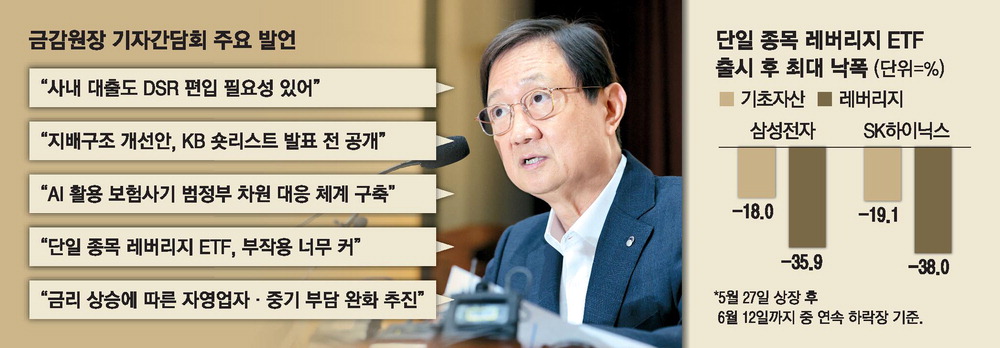
Regulatory concern is growing over 2x leveraged single-stock ETFs linked to Samsung Electronics and SK Hynix. Lee Chan-jin warned that the products may prioritize brokerage profits over investor protection. Because they seek twice the daily move of a single stock, gains and losses can expand quickly for retail investors.
Partner picks
Relevant partner links for this story
A lightweight commerce block designed to add monetization without breaking reading flow.
Advertisement
This module may include affiliate links that earn a commission from qualifying purchases. ETF와이어

The controversy over single-stock 2x ETFs has become a central issue in Korea’s fund market. Financial Supervisory Service Governor Lee Chan-jin expressed strong concern that leveraged ETFs tied to Samsung Electronics and SK Hynix are creating a structure that benefits securities firms more than investors. The products attract retail demand by offering double exposure to Korea’s best-known semiconductor stocks, but the burden of amplified losses and costs can fall heavily on investors.
Double exposure to semiconductor giants
A single-stock 2x ETF is designed to track roughly twice the daily return of one underlying share. If Samsung Electronics rises 5% in one day, the ETF targets about a 10% gain; if the stock falls 5%, the ETF can lose about 10%. A 10 million won investment effectively gives exposure to about 20 million won of Samsung Electronics or SK Hynix price movement. The key risk is that this does not guarantee twice the return over a longer holding period. Daily rebalancing means returns can diverge from two times the stock’s cumulative move, especially when prices swing up and down.
Revenue to sellers, risk to retail investors
The regulator’s concern centers on fees, trading activity and product complexity. Leveraged ETFs can involve frequent rebalancing and derivative transactions. When investors trade repeatedly in pursuit of short-term moves, turnover rises and brokerage and management fee income increases. Losses, however, are reflected directly in investor accounts when the stock moves the wrong way. Samsung Electronics and SK Hynix are familiar blue-chip names in Korea, which can make the products appear safer than they are. Once 2x leverage is attached, the product behaves less like a long-term equity ETF and more like a high-risk short-term trading tool.
Market impact and regulatory outlook
Korea’s ETF market has grown rapidly as retail money flows into won-denominated products. If single-stock leveraged ETFs tied to major semiconductor names spread further, short-term crowding and volatility could increase. The warning signals closer scrutiny of product launches, risk disclosures, suitability checks and advertising language. Investors should look beyond phrases such as “Samsung 2x” or “SK Hynix 2x” and examine daily return tracking, compounding effects, fees and loss amplification. These ETFs can magnify gains when the direction is right, but they can also magnify losses quickly when the market reverses or moves sideways.
Partner picks
Relevant partner links for this story
A lightweight commerce block designed to add monetization without breaking reading flow.
Advertisement
This module may include affiliate links that earn a commission from qualifying purchases. ETF와이어
Key points
- Regulatory concern is growing over 2x leveraged single-stock ETFs linked to Samsung Electronics and SK Hynix. Lee Chan-jin warned that the products may prioritize brokerage profits over investor protection. Because they seek twice the daily move of a single stock, gains and losses can expand quickly for retail investors.
- Use the body and FAQ context before acting on this update.
- Compare with related issues inside the category hub.
FAQ
What is a single-stock 2x ETF?
It is a high-risk ETF designed to track about twice the daily return of one stock, such as Samsung Electronics or SK Hynix.
Why is the regulator concerned?
Investor losses can be amplified while trading and management fees may increase revenue for securities firms and asset managers.
What should retail investors check?
They should check daily 2x tracking, possible divergence during longer holding periods, fees, trading costs and amplified loss risk.
Related stories
Asset managers post record Q1 operating profit, yet 4 in 10 stay in the red as ETF divide widens
Korea’s asset management industry posted its highest quarterly operating profit in Q1, helped by a stronger equity market and rapid ETF expansion. The gains were uneven. Roughly four in ten managers still reported losses as scale, brand power and distribution access concentrated profits among larger firms.
Samsung Electronics and SK Hynix Leveraged ETFs Face New Safeguards
Single-stock leveraged ETFs linked to Samsung Electronics and SK Hynix have become a direct regulatory concern. Lee Chan-jin said the products should have been stopped forcefully before the frenzy grew. High-turnover trading, retail concentration and daily leverage resets are amplifying risk. New safeguards are expected to focus on disclosure, suitability ch

Asset Manager Earnings Split Widens as ETF Growth Leaves 40% in Losses
Korea’s asset management industry delivered record quarterly operating profit in the first quarter. A stronger stock market and rapid ETF growth lifted fee income. Still, roughly four in ten managers posted losses, showing a widening profitability gap. Scale, liquidity and distribution power are becoming decisive in the ETF era.
Partner picks
Relevant partner links for this story
A lightweight commerce block designed to add monetization without breaking reading flow.
Advertisement
This module may include affiliate links that earn a commission from qualifying purchases. ETF와이어