Samsung Electronics and SK Hynix Leveraged ETFs Face New Safeguards
Single-stock leveraged ETFs linked to Samsung Electronics and SK Hynix have become a direct regulatory concern. Lee Chan-jin said the products should have been stopped forcefully before the frenzy grew. High-turnover trading, retail concentration and daily leverage resets are amplifying risk. New safeguards are expected to focus on disclosure, suitability ch
Partner picks
Relevant partner links for this story
A lightweight commerce block designed to add monetization without breaking reading flow.
Advertisement
This module may include affiliate links that earn a commission from qualifying purchases. ETF와이어
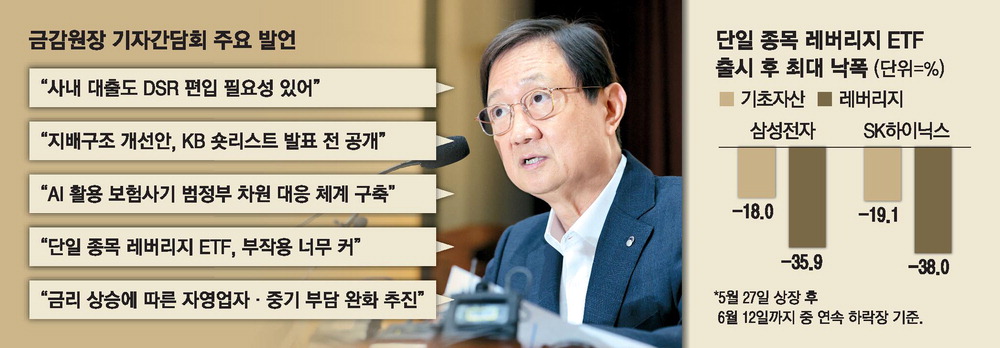
The overheating in Samsung Electronics and SK Hynix single-stock leveraged ETFs has pushed Korea’s financial supervisor toward additional investor protections. Lee Chan-jin sharply criticized the so-called “Samjeon-Nix” leveraged ETFs, saying they should have been blocked even by lying down in protest. The concern is clear: investor demand has crowded into two major semiconductor stocks while leverage magnifies losses faster than ordinary equity exposure.
Why Single-Stock Leverage Is Risky
A single-stock leveraged ETF tracks the daily move of one stock, such as Samsung Electronics or SK Hynix, by a multiple. If the underlying share rises 1% in a day, a 2x product aims for roughly 2%; if it falls 1%, the loss is also about 2%. The danger is that long-term returns do not simply become twice the stock’s return. Daily resets, compounding and volatility drag can erode performance when prices swing back and forth. A retail investor putting in 1 million won can see losses expand quickly in won terms when a semiconductor stock reverses even for a single session.
Retail Trading Pressure
The regulator is focused on the shift from popular product to overheated trading vehicle. Samsung Electronics and SK Hynix are among Korea’s largest and most actively traded stocks. Adding leverage gives investors larger exposure with less cash, which encourages short-term directional bets. Frequent buying and selling can raise fee burdens, tracking gaps and intraday volatility. Retail investors who enter only on optimism about chips may underestimate how fast leveraged ETF losses can grow.
What Comes Next
The next safeguards are expected to center on suitability checks, stronger risk warnings, trading controls during overheated periods and clearer product explanations. Korea’s ETF market benefits from easy access and real-time trading, but single-stock leveraged ETFs offer limited diversification. Investors are exposed at once to semiconductor cycles, the won-dollar exchange rate, U.S. tech sentiment and memory-chip price expectations. The policy direction is more likely to restrain overheating and improve loss awareness than to remove the products outright.
Partner picks
Relevant partner links for this story
A lightweight commerce block designed to add monetization without breaking reading flow.
Advertisement
This module may include affiliate links that earn a commission from qualifying purchases. ETF와이어
Key points
- Single-stock leveraged ETFs linked to Samsung Electronics and SK Hynix have become a direct regulatory concern. Lee Chan-jin said the products should have been stopped forcefully before the frenzy grew. High-turnover trading, retail concentration and daily leverage resets are amplifying risk. New safeguards are expected to focus on disclosure, suitability ch
- Use the body and FAQ context before acting on this update.
- Compare with related issues inside the category hub.
FAQ
Why are Samsung Electronics and SK Hynix leveraged ETFs under scrutiny?
They combine single-stock exposure with leverage, making price swings and losses faster than in ordinary stock investing.
Are leveraged ETFs suitable for long-term holding?
They track daily leveraged returns, so long-term performance may diverge from a simple multiple of the underlying stock because of compounding and volatility drag.
What will the new safeguards target?
They are expected to reduce overheated trading, strengthen risk disclosure and make sure retail investors understand potential losses.
Related stories

Asset Manager Earnings Split Widens as ETF Growth Leaves 40% in Losses
Korea’s asset management industry delivered record quarterly operating profit in the first quarter. A stronger stock market and rapid ETF growth lifted fee income. Still, roughly four in ten managers posted losses, showing a widening profitability gap. Scale, liquidity and distribution power are becoming decisive in the ETF era.
KB Asset Management Takes 5.09% Stake in JLK, Spotlighting Medical AI Flow
KB Asset Management has taken a 5.09% stake in JLK and classified the position as a simple investment. In Korea, ownership above 5% is a visible institutional signal. The move points less to control and more to exposure to medical AI growth. Investors should watch won-based valuation, stake changes and ETF or fund flows.
Timefolio With Time Fund Tops KRW 1 Trillion in AUM, Strengthening Active Fund Profile
Timefolio Asset Management’s Timefolio With Time fund has crossed KRW 1 trillion in AUM. The milestone signals stronger investor confidence, broader distribution support and greater visibility for active funds in Korea. For investors, scale can indicate liquidity depth and operating durability, though fees, volatility and strategy remain essential checks.
Partner picks
Relevant partner links for this story
A lightweight commerce block designed to add monetization without breaking reading flow.
Advertisement
This module may include affiliate links that earn a commission from qualifying purchases. ETF와이어