Regional Venture Funds Turn K-Startup Discovery Into a New Growth Engine
K-content exports rose to a record $14.9 billion in 2025. The next growth challenge is discovering technology and content startups outside Seoul. Regional venture funds can fill early funding gaps and industrialize K-culture expansion. Follow-on capital, exits, and regulatory readiness will decide the outcome.

Regional venture funds have become the next battleground for Korea’s K-startup ecosystem. With K-content exports reaching a record $14.9 billion in 2025, music, video, games, webtoons, and intellectual property businesses are no longer just cultural phenomena. They now represent a global revenue base worth roughly 20 trillion won, pushing investors toward a discovery economy that identifies undervalued regional companies before they become obvious.
Exports Change the Investment Lens
The $14.9 billion export figure shows how K-culture is merging with technology, platforms, commerce, tourism, and education. Content producers are building global distribution data, while startups target translation, rights management, fan communities, merchandise logistics, and AI production tools. Investment criteria have shifted from raw user counts to overseas revenue conversion, IP scalability, platform dependence, and the durability of local production infrastructure.
Regional funds are close to that field. Busan offers video and game assets, Daegu and North Gyeongsang connect manufacturing to merchandise and content tech, Gwangju and South Jeolla support immersive media, while Gangwon and Jeju link tourism with content. Even small early revenue can gain validation faster when local networks and public test beds are available.
The Economics of Discovery
The role of a regional venture fund is not simply to invest cheaply. It is to see first. These funds verify teams that Seoul-based investors may miss and connect them with local governments, universities, content agencies, and mid-sized companies. That can ease Korea’s capital concentration, while spreading the gains from K-content exports into regional jobs and tax bases.
For readers and individual investors, the signal matters. Direct access to private regional K-startups may be limited, but the trend can be tracked through venture fund structures, public fund commitments, strategic investments by listed media and entertainment firms, and media, entertainment, or platform stocks that may enter ETF portfolios.
Follow-On Capital Matters
The outlook is favorable, but growth is not automatic. Regional funds need pipelines that connect early discoveries with Seoul and overseas capital. Content startups face volatile hit cycles, copyright issues, likeness rights, and data rules, so legal and global contracting capability matters. The $14.9 billion export record is a starting point. The next phase depends on whether small K-startups found in regional markets can build repeatable global revenue.
Key points
- K-content exports rose to a record $14.9 billion in 2025. The next growth challenge is discovering technology and content startups outside Seoul. Regional venture funds can fill early funding gaps and industrialize K-culture expansion. Follow-on capital, exits, and regulatory readiness will decide the outcome.
- Use the body and FAQ context before acting on this update.
- Compare with related issues inside the category hub.
FAQ
How large were K-content exports in 2025?
K-content exports reached $14.9 billion in 2025, the highest level on record.
Why do regional venture funds matter?
They can find content, technology, tourism, and manufacturing-linked startups outside Seoul earlier and connect them with growth capital.
How can individual investors follow this trend?
They can monitor public funds, ETFs, listed media and platform companies, and strategic investment disclosures, since direct private fund access may be limited.
Latest stories

KCGI Leads 3040 Retirement Pension Funds With Korea-Tailored Design
KCGI has taken first place in retirement pension fund returns by attracting investors in their 30s and 40s. Its edge lies in fund design that reflects Korean retirement timing, won-based expenses and long-term risk control. The shift shows that pension competition is moving toward lifecycle-based asset management.
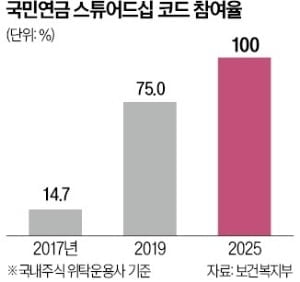
NPS to Directly Check External Managers’ Stewardship Code Practices
The National Pension Service is shifting to direct oversight of external managers’ stewardship code implementation. The move extends fiduciary responsibility beyond in-house portfolios to delegated mandates. Voting records, company engagement, ESG responses, conflict controls and reporting systems will become central review points. Korean ETF and asset manag

Leveraged ETF oversight tightens as Korea’s FSS summons asset managers
Korea’s FSS has summoned domestic asset managers, putting leveraged ETF oversight on the regulatory agenda. These funds target multiples of daily index moves, often 2x, but losses can accelerate when volatility rises. The review centers on product design, risk disclosure, liquidity controls and safeguards for retail investors.
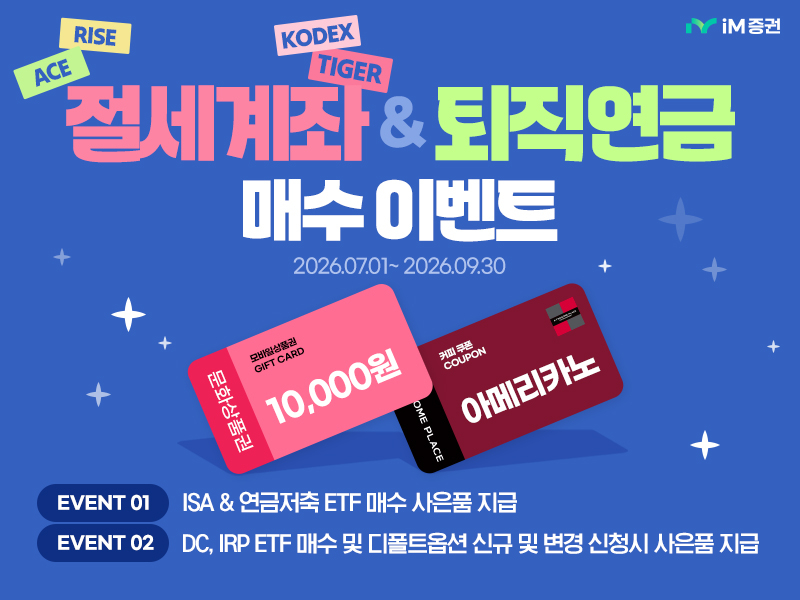
iM Securities ETF Trading Event for Tax-Saving and Retirement Accounts Runs Until Sept. 30
iM Securities is launching an ETF trading event for tax-saving and retirement pension accounts. The event runs from July 2 to Sept. 30. Eligible accounts include ISAs and retirement pension accounts. The move highlights stronger competition in Korea for long-term ETF investors using tax-advantaged accounts.

Comcast Media Spinoff Puts Sector and Dividend ETFs Under Review
Comcast’s media spinoff has become a key issue for sector and dividend ETFs that hold CMCSA. NBCUniversal and Sky will move into a separate listed company, forcing index providers and ETF managers to reassess classification, weights and dividend screens. Korean investors should monitor both U.S.-listed ETFs and Korea-listed overseas equity ETFs for rebalanci

Energy and Income ETFs Move Up the 2026 Portfolio Agenda as Amplify’s Nathan Miller Frames the Second Half
Energy ETFs and income ETFs emerged as key second-half portfolio themes at the late-June 2026 Midyear Outlook Symposium. Nathan Miller of Amplify ETFs framed the two areas around volatility management and cash-flow demand. For Korean investors, the practical issues include dollar distributions, exchange rates, trading costs, and account-level tax treatment.

Top 10 Active ETFs Reveal 2026’s Key Investment Themes
Active ETFs faced a major test in the volatile first half of 2026. The top 10 year-to-date performers show that strong technology earnings and disciplined security selection mattered more than broad thematic exposure. For Korean investors, currency moves, taxes and access to overseas ETFs remain key considerations.

Micron Earnings Surprise Revives AI Memory Semiconductor ETF Momentum
Micron’s fiscal third-quarter numbers reset the near-term case for memory ETFs. Adjusted EPS reached $25.11 and revenue hit $41.46 billion, far above market expectations. AI inference is deepening demand for HBM, DRAM and NAND while supply remains slow to respond. Korean investors should weigh FX, tax, hedge structure and exposure to Samsung Electronics and